

If no one has ever explained what the pelvic floor is, you’re not alone.
Most women grow up learning very little about this part of the body—until something starts to feel “off.” And even then, many women aren’t sure where to turn or whether what they’re experiencing is normal.
The truth is, the pelvic floor is an important group of muscles that plays a role in everyday life—and learning about it doesn’t have to be intimidating, stressful, or overwhelming. Let’s break it down simply.
What Is the Pelvic Floor?
The pelvic floor isn’t just one muscle—it’s a group of muscles and connective tissues that sit at the bottom of your pelvis. You can think of it like a hammock or sling that supports the organs in your pelvis, including the bladder, bowel, and uterus.

These muscles work quietly in the background every day, helping with things like:
- Bladder and bowel control
- Supporting your posture and stability
- Sexual function
- Coordinating with breathing
- Supporting you during movement, lifting, and exercise
Even though they’re rarely talked about, pelvic floor muscles are involved in far more than most people realize.
What Is the Pelvic Floor Supposed to Do?
A healthy pelvic floor is responsive, not rigid.
That means it should:
- Gently contract when you need support (like when you cough, laugh, or lift something)
- Fully relax when you go to the bathroom
- Move naturally with your breath
- Adapt to changes like exercise, pregnancy, stress, aging, or injury
One important thing to know: pelvic floor issues don’t always come from weakness. Sometimes these muscles are overworking or holding too much tension, which can cause just as many symptoms.
Why “Just Do Kegels” Isn’t Always the Answer
Many of the patients I work with come in after doing their own research—which makes complete sense. When something doesn’t feel right, it’s natural to look for answers online and try to fix it yourself.
One of the most common messages women see is: “Just do Kegels.”
But here’s the truth—Kegels are not the solution for everyone.
For some people, repeatedly tightening the pelvic floor without knowing what’s actually going on can:
- Increase tension
- Worsen pain
- Make symptoms like difficulty emptying or discomfort more noticeable
In other words, doing the wrong exercises for your body can sometimes make things feel worse instead of better.
This is why it’s often best to be evaluated by a pelvic floor physical therapist—or to bring these concerns up with your OB-GYN. A proper assessment helps determine whether your pelvic floor needs strengthening, relaxation, coordination work, or a combination of all three.
Common Signs Your Pelvic Floor May Need Support
Pelvic floor symptoms are incredibly common—and they can show up in subtle ways. Some women experience:
- Leaking urine when laughing, coughing, or exercising
- A feeling of pressure or heaviness in the pelvis
- Pain with intercourse, tampon use, or pelvic exams
- Difficulty fully emptying the bladder or bowels Ongoing hip, low back, or tailbone discomfort
Having symptoms does not mean your body is broken. It often means the muscles are asking for a different kind of support.

Common Doesn’t Mean Normal—and You’re Allowed to Advocate for Yourself
One of the biggest things I talk about with my patients is the idea that common does not always mean normal.
As women, we’re often told—sometimes by well-meaning friends and sometimes even by healthcare providers—that certain symptoms are “just part of life.” That leaking is expected. That pain is something to push through. That discomfort is something to accept because so many other women experience it too.
But just because something is common doesn’t mean you have to live with it.
There are many pelvic floor symptoms that are treatable and manageable, and you deserve to know what your options are. Advocating for yourself might look like asking more questions, seeking another opinion, or simply saying, “This doesn’t feel normal for me.”
Listening to your body and taking it seriously is not overreacting—it’s self-advocacy.
The Pelvic Floor Is Part of Your Core
Your pelvic floor doesn’t work in isolation. It’s an essential part of your foundational core system, along with your diaphragm, abdominal muscles, and back muscles.

When these areas work together:
- Movement feels more stable
- Breathing feels easier
- Strength training becomes more effective
- Your body feels better supported overall
The goal isn’t to constantly think about or tense your pelvic floor throughout the day. Pelvic floor therapy focuses on awareness first, then gradually progressing toward better coordination and strength—so your core can support you naturally in everyday life.
What Is Pelvic Floor Physical Therapy Like?
Pelvic floor physical therapy is not about pushing through discomfort or forcing your body to “behave.” It’s about understanding how your body works and helping it function more comfortably.
Sessions often include:
- Education about your pelvic floor and core Breathing and movement strategies
- Gentle strengthening or relaxation techniques
- A plan that’s tailored specifically to you
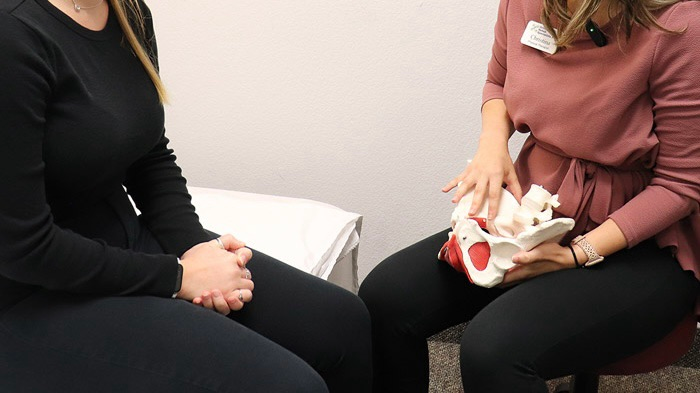
Care is always consent-based, collaborative, and individualized. Many women are surprised by how calm, respectful, and empowering the process feels.
This Is the Work I Do
As a pelvic floor physical therapist, this is exactly the kind of care I provide. I work with women of all ages and life stages, helping them better understand their bodies and build a stronger, more supportive foundation from the inside out.
Pelvic floor therapy doesn’t have to be stressful or intimidating. It can be low-pressure, educational, and empowering—and it often starts with simply having a conversation.
A Gentle Invitation
If anything in this post resonated with you—whether it’s a symptom you’ve been brushing off or a question you’ve quietly wondered about—know that support is available.
You deserve care that feels safe, informed, and respectful. And sometimes, learning what’s going on is the first step toward feeling better.