
If you spend any time in the fitness world, you’ve probably heard a lot of opinions about what you should eat around your workouts.
Some people swear by fasted workouts. Others feel like they need to carb-load before exercise. Some take a quick shot of pre-workout powder before hitting the gym (dry scoop style… which always takes me by surprise!)
In the clinic, I get questions about this all the time. Patients will often ask me before a physical therapy session:
“Should I eat something before I come?”
“Does it matter what I eat after rehab exercises?”
The honest answer is that nutrition around workouts can matter — but it doesn’t have to be complicated.
Most of the time, your body simply needs two things:
- energy before movement
- nutrients to recover afterward
Why Workout Nutrition Matters
When you exercise, your body is doing several things at once.
Your muscles are contracting repeatedly, your heart rate increases, and your body begins using stored energy to fuel movement.
One of the primary energy sources your muscles rely on during exercise is glycogen, which is the stored form of carbohydrates in your muscles and liver.
As you exercise:
- glycogen gets used for energy
- muscle fibers experience small amounts of stress and breakdown
- your body begins the process of rebuilding and adapting
Nutrition helps support this entire process.
Fueling appropriately can help with:
- maintaining energy during workouts
- improving performance
- supporting muscle recovery
- reducing excessive fatigue afterward
The type of nutrition that supports your body before a workout is a little different from what helps after a workout, which is why both can play a role.
Pre-Workout Nutrition: Fuel for Energy

The main goal of pre-workout nutrition is simple: supply your body with usable energy for movement.
If you’ve ever tried exercising when you were overly hungry, lightheaded, or running on empty, you know how quickly energy can drop.
Carbohydrates are typically the most helpful nutrient before exercise because they can be converted into energy quickly.
A small amount of protein can also help support muscle function, but heavy meals high in fat or fiber right before a workout may sit in the stomach longer and feel uncomfortable.
Timing matters.
You don’t necessarily need to eat immediately before exercise.
A general guideline is:
- 2–3 hours before exercise: A balanced meal with protein, carbohydrates, and healthy fats.
- 30–60 minutes before exercise: A smaller snack that is easy to digest.
Simple Pre-Workout Snack Ideas
Some examples include:
- a banana with peanut butter
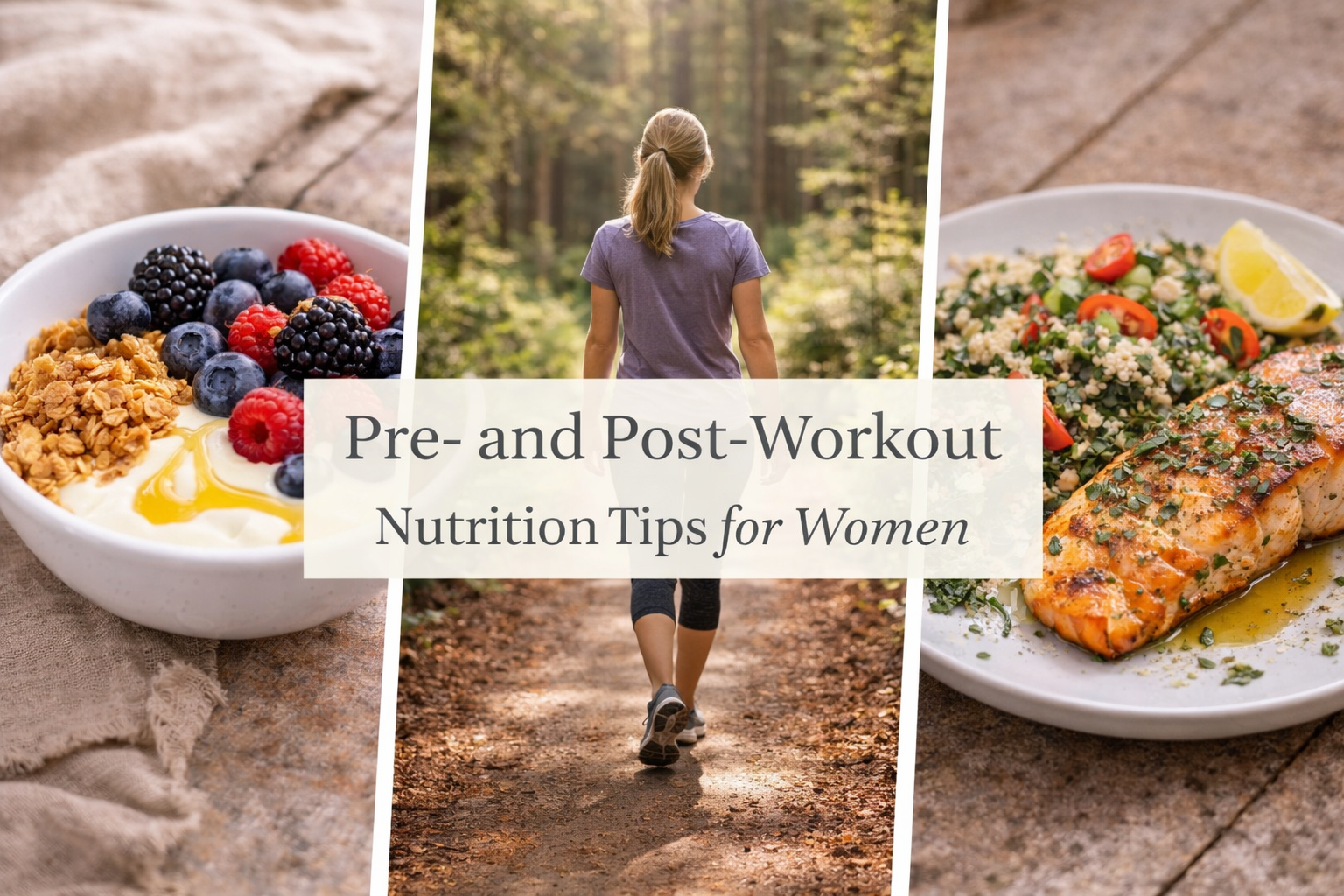
- Greek yogurt with berries
- oatmeal with fruit
- a rice cake with almond butter
- toast with an egg
- a smoothie with fruit and protein
These options provide quick energy without feeling overly heavy.
Of course, everyone is a little different. Some people feel great with a small snack beforehand, while others prefer to eat a larger meal earlier in the day.
Post-Workout Nutrition: Supporting Recovery

After exercise, the focus shifts from energy to recovery.
During a workout, muscle fibers experience small amounts of stress. This is part of the process that allows muscles to become stronger over time.
Post-workout nutrition helps support that rebuilding process.
The two nutrients that tend to matter most after exercise are:
- Protein: helps repair and rebuild muscle tissue
- Carbohydrates: help replenish glycogen stores that were used during exercise
Hydration also plays an important role, especially if the workout involved sweating.
Timing
You may have heard about the “post-workout window.” While eating soon after exercise can be helpful, it doesn’t have to be immediate.
In most cases, eating within one to two hours after a workout is perfectly adequate.
Post-Workout Meal Ideas
Some simple recovery options include:
- eggs with toast
- chicken with rice and vegetables
- a protein smoothie with fruit
- Greek yogurt with granola
- cottage cheese with fruit
The goal is simply to provide your body with protein for repair and carbohydrates for recovery.
Do You Always Need a Pre- or Post-Workout Snack?
Not always. Many workouts don’t require special nutrition planning.
For example, if you ate a balanced meal an hour or two before exercising, you may already have enough fuel available.
Shorter or lower-intensity workouts also may not require additional snacks.
There are also some trends that have become popular in recent years, including fasted workouts.
Some people enjoy exercising before eating in the morning, and for certain individuals this can feel comfortable.
However, fasting is not automatically better for performance or health. For some people, it can actually lead to lower energy, dizziness, or reduced exercise intensity.
Like many wellness trends, it’s important to remember that what works for one person may not work for another.
Special Considerations for Women

Women’s bodies are influenced by several factors that can affect both exercise and nutrition needs.
Type of Workout
Different types of exercise use energy differently.
For example:
- strength training places greater demands on muscle repair
- longer endurance workouts rely more heavily on glycogen stores
- rehabilitation exercises may require steady energy for controlled movement
Menstrual Cycle
Hormonal fluctuations during the menstrual cycle can influence:
- energy levels
- perceived exertion
- recovery needs
Some women may feel stronger during certain phases of their cycle, while others may notice lower energy or increased fatigue.
Bone Health
For women with osteopenia or osteoporosis, resistance training and weight-bearing exercise can be particularly important for supporting bone health.
Adequate nutrition — especially sufficient protein and overall energy intake — helps support these adaptations.
Undereating or chronic under-fueling can sometimes interfere with recovery and long-term progress.
Simple Guidelines to Keep It Easy
If nutrition around workouts feels confusing, these simple principles can help:
- If it’s been several hours since your last meal, consider a small snack before exercise.
- Focus on carbohydrates for energy before workouts.
- Include protein after workouts to support recovery.
- Stay hydrated throughout the day.
- Try not to overcomplicate things.
Consistency with both movement and nourishment matters much more than getting every detail perfect.
Closing Thoughts
Exercise doesn’t require perfect nutrition to be beneficial.
Your body is remarkably adaptable, and even small, consistent habits can support strength, recovery, and overall well-being.
Rather than worrying about strict rules, it can be helpful to think of nutrition as supporting your body through movement.
A small snack before a workout, and a balanced meal afterward. Listening to your body’s hunger cues. Often, that is enough. You’ve got this!