
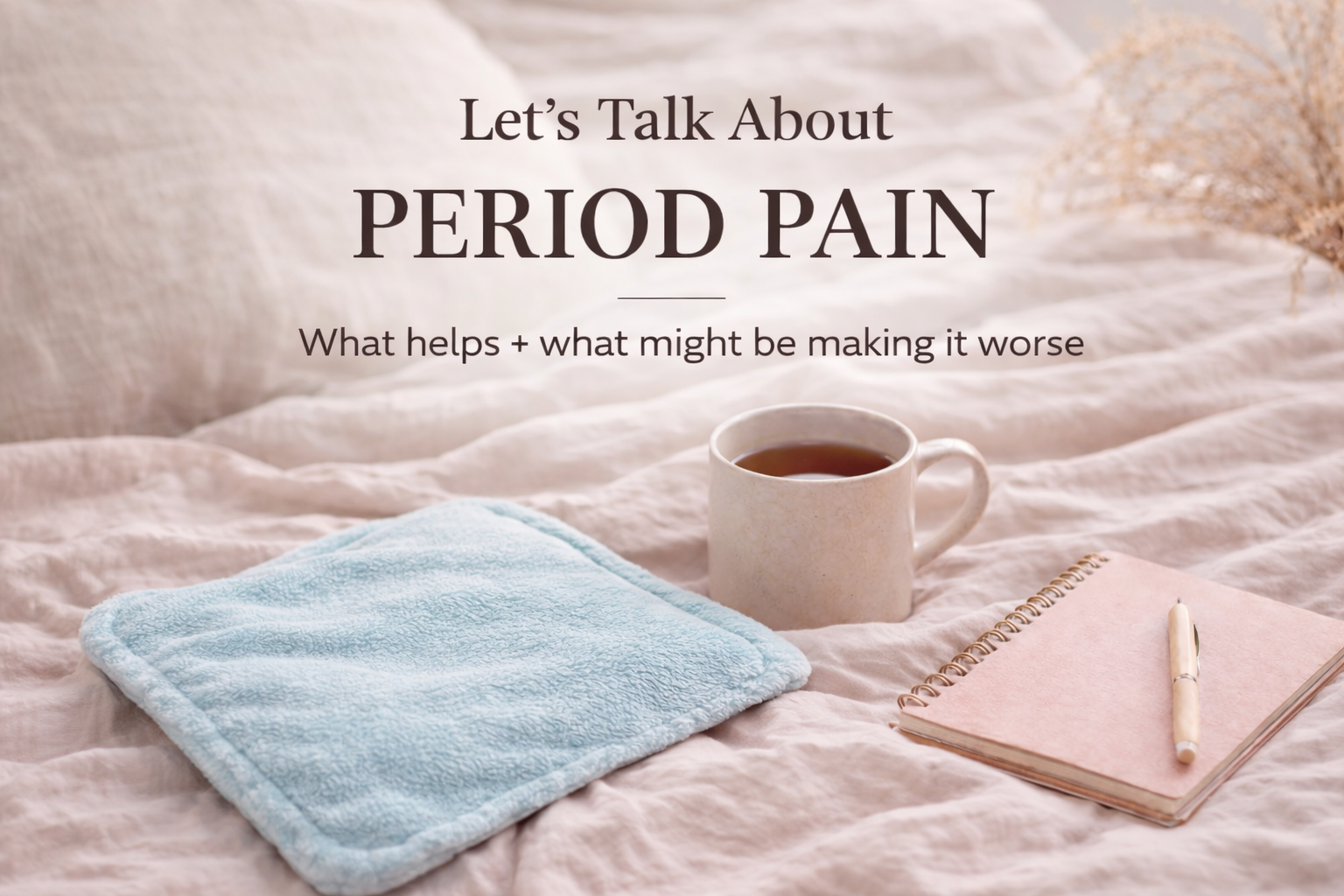
As a pelvic floor physical therapist, I work often with individuals experiencing chronic pelvic pain—especially pain related to their menstrual cycles. And speaking from personal experience as well, period pain can be incredibly disruptive, frustrating, and exhausting.
But it’s also very common.
Up to 80% of women experience period pain (dysmenorrhea) at some point in their lives. For many, it goes beyond mild cramping and can impact daily activities, work, movement, and overall quality of life.
Pain is often more severe in those with conditions such as PCOS, fibroids, or endometriosis, which can further influence how symptoms present and how they should be managed.
What isn’t talked about enough is what actually helps—and what may be making symptoms worse.

What Can Help Period Pain
Gentle movement
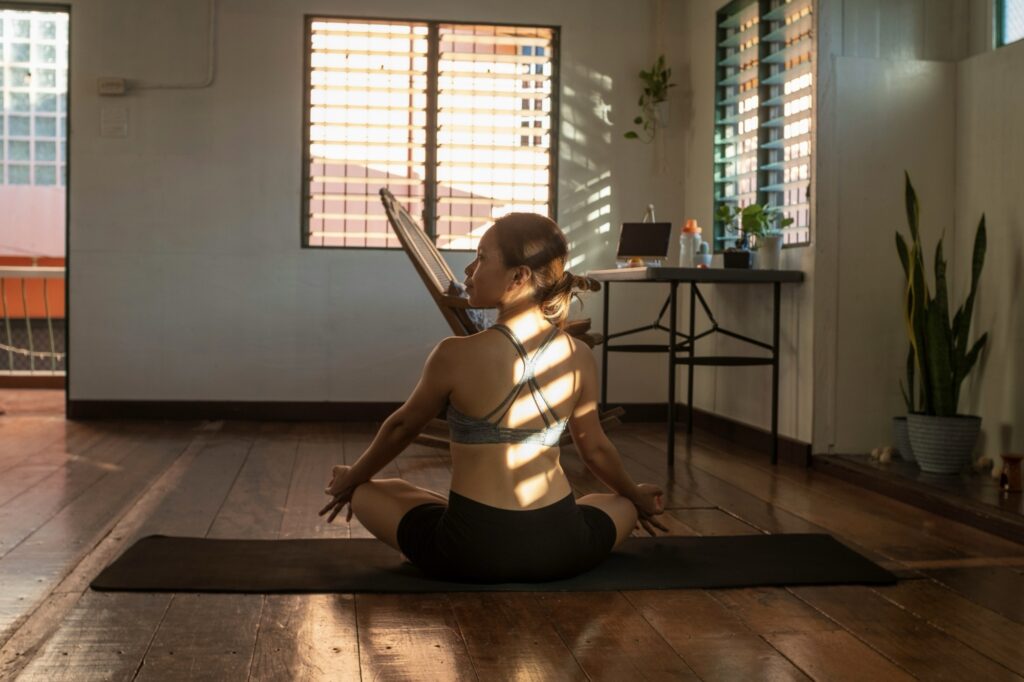
Light activity such as walking, stretching, or yoga can increase circulation and help reduce cramping. Think child’s pose, figure four, cat/cow.
Heat therapy
Using a heating pad or taking a warm bath can relax muscles and provide relief.
Hydration and balanced nutrition
Adequate hydration and consistent, balanced meals support the body during your cycle.
Pelvic floor relaxation
Many people unknowingly hold tension in their pelvic floor. Learning to relax these muscles can reduce discomfort. Think about deep belly breaths – as if you are inflating a balloon into your belly.
Anti-inflammatory support
Incorporating nutrients such as omega-3 fatty acids, magnesium, and antioxidant-rich foods may help manage inflammation.
Rest when needed
Fatigue during your cycle is real. Allowing your body to rest is an important part of recovery. Don’t skip out on sleep!

What May Make It Worse
Ignoring persistent or severe pain
Pain that interferes with daily life should not be dismissed. See your OBGYN or pelvic floor therapist for additional guidance.
High-intensity exercise during peak symptoms
Strenuous activity can sometimes increase discomfort during heavier or more painful days.
Constant abdominal bracing
Habitually holding tension in the core or “sucking in” can contribute to pelvic floor dysfunction, as well as increased tension within the abdominals.
Skipping meals or under-fueling
Inadequate nutrition can worsen symptoms and energy levels.
Assuming pain is something you have to tolerate
While common, significant period pain is not something you should have to simply push through.
A Final Note
Painful periods are common, but they are not something you need to navigate alone. If your symptoms are severe, worsening, or affecting your daily life, it may be helpful to seek support from a pelvic floor physical therapist, OB-GYN, or another trusted provider.
Understanding your cycle and supporting your body can make a meaningful difference in how you feel each month.