
Have you ever started a new workout routine, finally stayed consistent with a strength split, or pushed yourself a little harder than usual—only to wake up the next day barely able to sit, stand, or walk normally?
Yep… I have been there.
That deep, lingering soreness you feel a day or two after a workout has a name: DOMS, or Delayed Onset Muscle Soreness. Let’s break down what it actually is, how to handle it, and what your body is trying to tell you.
What Is DOMS?
DOMS typically shows up 12–48 hours after exercise and can last a few days. It’s especially common when:
- You try a new workout you have don’t before or in a long time
- You increase weight or intensity
- You focus on slow, controlled (eccentric) movements (think lowering into a squat or slowly lowering a dumbbell)
What’s happening in your body?
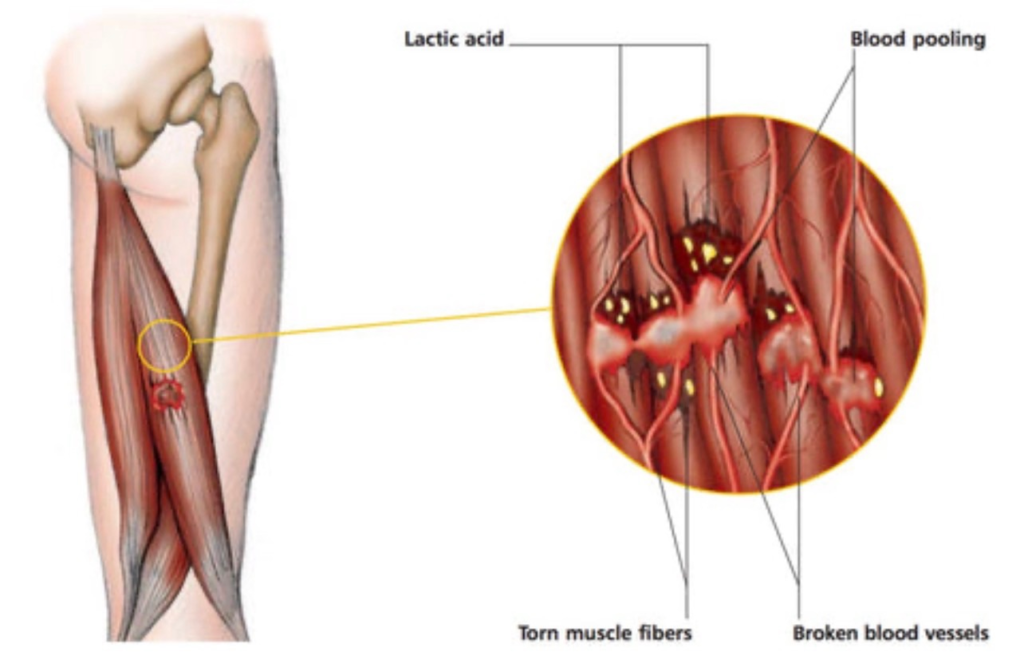
Tiny micro-tears form in your muscle fibers during exercise. Your body repairs them, making your muscles stronger—but that repair process causes inflammation and soreness.
How Do I Know If It’s DOMS (or Something Else)?
DOMS usually feels like:
- A dull, aching soreness
- Stiffness when you move
- Tenderness when you press the muscle
- Reduced range of motion
It’s probably NOT DOMS if you feel:
- Sharp or stabbing pain
- Pain during the workout itself
- Swelling, bruising, or joint instability
If that’s the case, it could be a strain or injury—and it’s worth taking a step back.
Is DOMS More Common With Certain Workouts?
Yes—some workouts are way more likely to cause it:
- Strength training (especially new programs)
- Eccentric-heavy movements
- HIIT or plyometrics
- Returning after a break
Even something like a long walk or hike can trigger DOMS if your body isn’t used to it!
Is DOMS a Good Thing? Should I Be Aiming for It?
This is a big myth-buster moment…
Extreme soreness is NOT the goal.
DOMS can mean you challenged your muscles—but:
- You can make progress without being sore
- Being extremely sore doesn’t mean you had a “better” workout
- Constant soreness can actually slow your progress
Think of it as feedback, not a requirement.
Should I Work Out If I’m Sore?
Short answer: yes… but be smart about it.
It’s okay to:
- Do light movement (walking, yoga, cycling)
- Train a different muscle group
- Lift lighter weights with good form
Maybe skip or modify if:
- You’re extremely sore (like “can’t sit down normally” sore)
- Your range of motion is limited
- Your form would be compromised
Movement actually helps reduce soreness, so don’t feel like you need to be completely sedentary. I frequently remind my patients of this in the clinic.
What Helps Relieve DOMS Faster?
Let’s get practical—because when you’re sore, you feel it.
1. Gentle Movement
- Walking
- Stretching
- Low-impact workouts
2. Hydration
- Aim for your usual daily goal (or slightly more)
- Helps with recovery and muscle function
3. Nutrition Matters
Focus on:
- Protein → supports muscle repair
- Carbs → replenish energy stores
- Anti-inflammatory foods, such as berries, leafy greens, omega-3s (salmon, chia seeds)
4. Heat + Cold
- Warm showers or heating pads = muscle relaxation
- Ice = helpful if there’s inflammation or swelling
5. Foam Rolling / Massage
- Can reduce tightness and improve circulation
- Doesn’t have to be intense—gentle works!

What About Stretching? (What Should I Actually Do?)
Keep it simple and gentle—this is NOT the time to force deep stretches.
Try these:
- Hamstring stretch (seated or standing)
- Quad stretch (standing, holding ankle)
- Child’s pose for full-body release
- Cat-cow for mobility
Hold each stretch for ~20–30 seconds
Focus on breathing, not pushing deeper
Do I Push Through the Pain?
Here’s your rule of thumb:
- Discomfort = okay
- Pain = stop
You don’t need to “push through” intense soreness to get results. In fact, doing so can increase injury risk and delay recovery.
How to Prevent DOMS in the Future
If you want to stay consistent (without feeling wrecked every time), this is key:
- Gradually increase intensity (don’t go 0 → 100)
- Warm up before workouts
- Stay consistent (big breaks = more soreness)
- Prioritize recovery days
- Fuel your body properly
Final Thoughts
DOMS is a totally normal part of getting stronger—but it’s not something you need to chase.
Your goal isn’t to be sore…
It’s to be consistent, strong, and feeling good in your body.
If you’re sore right now—take it as a sign you challenged yourself, give your body what it needs, and keep going. You’ve got this!