

If you’ve ever found yourself tossing and turning because of pelvic pain, you’re not alone.
As a pelvic floor physical therapist, I’ve worked with many women who struggle to get comfortable at night because of pelvic pain, hip pain, SI joint discomfort, pregnancy-related pain, or pelvic floor tension. And honestly, I’ve experienced periods of pelvic and low back discomfort myself where I became very aware of how much my sleeping position affected the quality of my sleep as well as how I felt the next morning.
It’s easy to underestimate the impact of sleep position until you wake up feeling stiff, achy, or like your pain has somehow gotten worse overnight.
But here’s the good news: often, it only takes a few adjustments to achieve more comfort and better sleep.
Let’s talk about the sleeping positions I most commonly recommend to my patients and why they can help.
Why Your Sleeping Position Matters
When you’re asleep, your body spends multiple hours in the same position. If your pelvis, hips, or lower back are not well supported, that prolonged pressure can contribute to discomfort and irritation.
Finding a comfortable sleeping position may help:
- Reduce stress on the pelvis and hips
- Improve spinal alignment
- Decrease tension in surrounding muscles
- Reduce morning stiffness
- Improve overall sleep quality
While there isn’t one perfect position for everyone, there are a few options that tend to work well for many people experiencing pelvic pain.
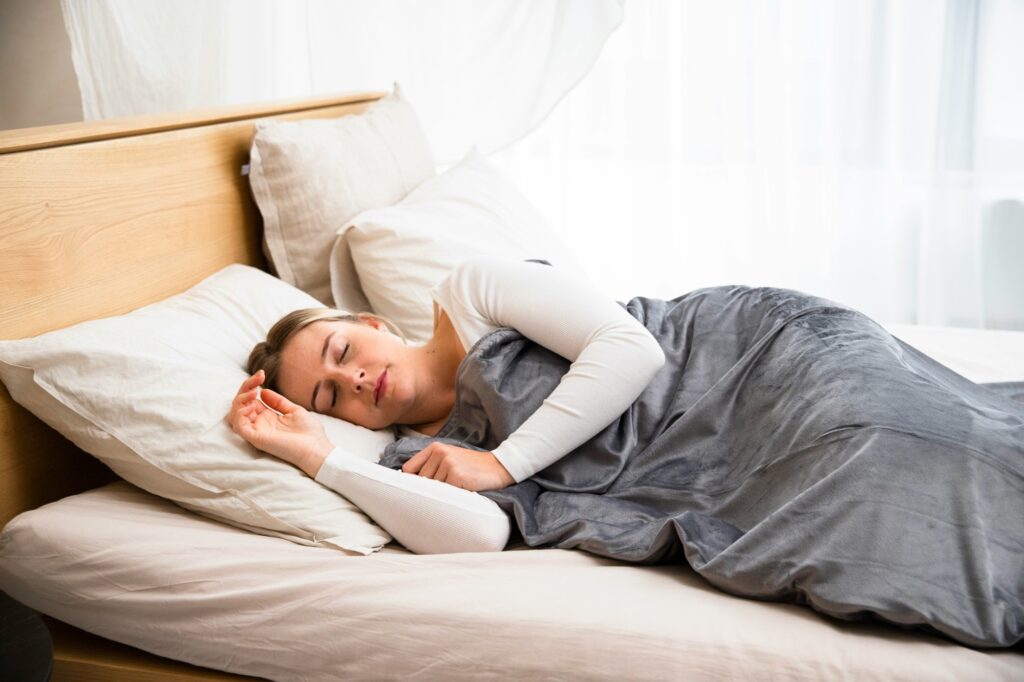
1. Side Sleeping with a Pillow Between Your Knees
If I could recommend one position to start with, this would be it.
Side sleeping with a pillow (or blanket) between your knees helps keep your pelvis in a more neutral position and prevents your top leg from pulling your hips forward during the night.
I often recommend placing the pillow not only between the knees but also between the ankles if possible. This provides additional support and helps maintain alignment through the entire lower body.
Many of my patients report waking up with less hip, pelvic, and low back discomfort after making this simple change.
Why it helps:
- Keeps the pelvis more aligned
- Reduces strain on the SI joints
- Decreases pressure through the hips
- May reduce stress on the lower back
2. Side Sleeping with Extra Pillow Support
For some people, a single pillow between the knees isn’t quite enough.
Adding additional support can create a more comfortable and stable position throughout the night.
Try:
- A pillow between your knees
- A pillow hugged against your chest
- A pillow behind your back for support
This can be especially helpful during pregnancy or for anyone who tends to roll into uncomfortable positions while sleeping.
One thing I often tell my patients is that sleeping comfortably isn’t a competition. If using three pillows helps you wake up feeling better, use the pillows.
3. Back Sleeping with a Pillow Under Your Knees
If you’re naturally a back sleeper, placing a pillow under your knees may help reduce tension through the lower back and pelvis.
The pillow creates a slight bend in the knees, which can decrease stress on the structures around the pelvis and help maintain a more neutral spinal position.
Some people with pelvic floor tension also find this position more comfortable because it allows the pelvic floor muscles to relax.
Why it helps:
- Supports a neutral spine
- Reduces low back strain
- May decrease tension around the pelvis
- Can be comfortable for pelvic floor muscle tightness
Sleeping Positions That May Worsen Pelvic Pain
Not every sleeping position is ideal when you’re dealing with pelvic discomfort.
Stomach Sleeping
Sleeping on your stomach often increases arching through the lower back and can place additional stress on the pelvis.
While not everyone experiences pain in this position, it’s one I frequently ask patients to modify when they’re experiencing persistent symptoms.
Twisted Positions
You know the position: one knee pulled up while the other leg stays straight, leaving your pelvis rotated for hours.
Many people find themselves naturally falling asleep this way, but it can increase stress on the pelvis, hips, and lower back.
If you notice you consistently wake up feeling sore on one side, your sleeping position may be contributing.
Additional Tips for Sleeping More Comfortably with Pelvic Pain
Beyond changing your position, a few other strategies may help:
Use Supportive Pillows
The right pillow setup can make a significant difference. Sometimes the solution isn’t changing how you sleep—it’s adding support where your body needs it.
Try Gentle Stretching Before Bed
A few minutes of gentle stretching or mobility work before bed may help reduce tension and improve comfort.
Practice Relaxed Breathing
Many people with pelvic pain unknowingly hold tension in their pelvic floor muscles throughout the day.
Taking a few minutes to focus on slow, relaxed breathing before bed can help encourage those muscles to relax.
Pay Attention to Your Mattress
If your mattress is extremely old, sagging, or no longer supportive, it may be contributing to your symptoms.
You don’t necessarily need a new mattress, but it’s worth considering if you’ve tried other strategies without success.
When to Seek Help
While sleeping position can make a meaningful difference, it’s important to remember that it may not address the underlying cause of pelvic pain.
Consider speaking with a healthcare provider or pelvic floor physical therapist if you experience:
- Persistent pelvic pain
- Pain that interferes with daily activities
- Pain with bladder or bowel function
- Pain during intimacy
- Pregnancy-related pelvic pain that continues to worsen
A thorough evaluation can help identify the root cause and create a treatment plan specific to your needs, and which specific muscles are involved.
Final Thoughts
One of the things I tell my patients most often is that small changes can add up.
You don’t need a complicated nighttime routine or a perfect sleeping setup. Sometimes something as simple as adding a pillow between your knees can make a noticeable difference in how you feel when you wake up.
I’ve seen these strategies help many patients over the years, and they’re often some of the first things I recommend because they’re simple, affordable, and easy to try tonight.
If you’re dealing with pelvic pain, don’t be afraid to experiment with different positions and supports. Your body will usually tell you pretty quickly what feels better—and getting a good night’s sleep is always worth the effort.