

If you’ve ever heard the term pelvic floor physical therapy and thought…
“Wait… what exactly is that?”
You’re not alone.
As a pelvic floor physical therapist, I meet patients every day who walk in unsure of what to expect — and often a little nervous. This is understandable. The pelvis isn’t something we casually talk about, and it can feel vulnerable to seek care for such a personal area of the body.
But here’s the truth: Pelvic floor physical therapy can be one of the most empowering, individualized, and life-changing types of care available — and it’s far less intimidating than it sounds.
So… What Is Pelvic Floor Physical Therapy?
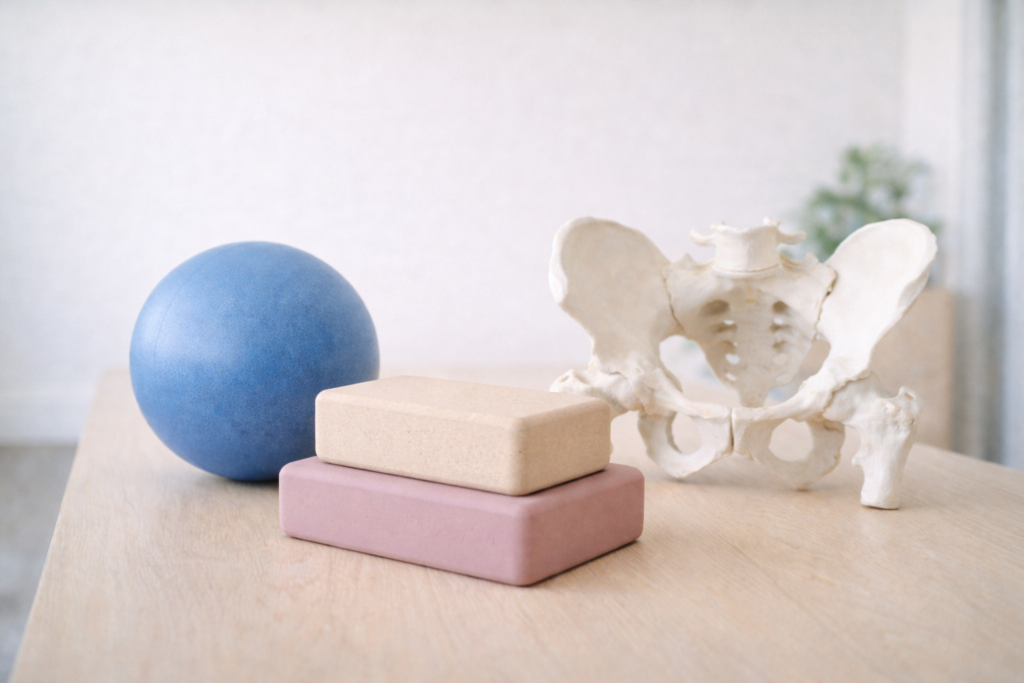
Pelvic floor physical therapy focuses on the muscles, connective tissue, and coordination of the pelvic floor — the group of muscles that support the bladder, bowel, and reproductive organs.
These muscles play a role in:
- Bladder and bowel control
- Core stability
- Sexual function
- Pregnancy and postpartum recovery
- Pain management
- Breathing mechanics
When these muscles are weak, overactive, uncoordinated, or tense, symptoms can show up in ways that affect daily life — sometimes mildly, sometimes significantly.
That’s where pelvic floor PT comes in.
What I Do as a Pelvic Floor PT
In my daily practice, I work with patients experiencing:
- Urinary leakage or urgency
- Pelvic pain
- Pain with intimacy
- Constipation or bowel dysfunction
- Pregnancy-related discomfort
- Postpartum recovery needs
- Core weakness or instability
And here’s something I always tell my patients:
These symptoms are common — but they are not something you just have to live with.
Pelvic floor therapy is not a one-size-fits-all approach. Every body is different. Every history is different. Every goal is different.
Your care is built around you.
What Happens at the First Evaluation?
This is usually the part that feels the most daunting — so let’s demystify it.
Your first visit is primarily about:
- Listening to your story
- Understanding your symptoms and goals
- Reviewing your medical history
- Discussing your comfort level
An evaluation may include:
- Posture and alignment assessment
- Breathing mechanics assessment
- Core and hip strength testing
- Movement analysis, such as through a squat or lunge
- Pelvic floor muscle assessment
The pelvic floor muscle assessment provides the most detailed information about the individual pelvic floor muscles, including their strength, coordination, resting tension, and direction of movement. Understanding these specifics allows us to create a treatment plan tailored precisely to what your body needs.
Not every evaluation requires an internal assessment, and you are always in control throughout the process. Your pelvic floor therapist will always discuss your options with you.
The goal is collaboration, not surprise.
What Does Treatment Look Like?
Pelvic floor PT often includes:
- Targeted strengthening
- Relaxation techniques
- Breath work
- Core retraining
- Mobility exercises
- Manual therapy
- Education (the most important!)
Your program is tailored specifically to your body and your goals.
Want to run without leaking?
Return to lifting?
Have pain-free intimacy?
Feel confident postpartum?
We build the plan around that.

It May Feel Intimidating — But It Doesn’t Have to Be
It’s completely normal to feel unsure about scheduling that first appointment.
There’s vulnerability in seeking care for something so personal.
But pelvic floor physical therapy is about restoring confidence, comfort, and function — not creating discomfort.
The first step is simply considering an evaluation.
You don’t have to commit to anything beyond that.
Just information, understanding, and exploring your options.
And from there, we build together.