
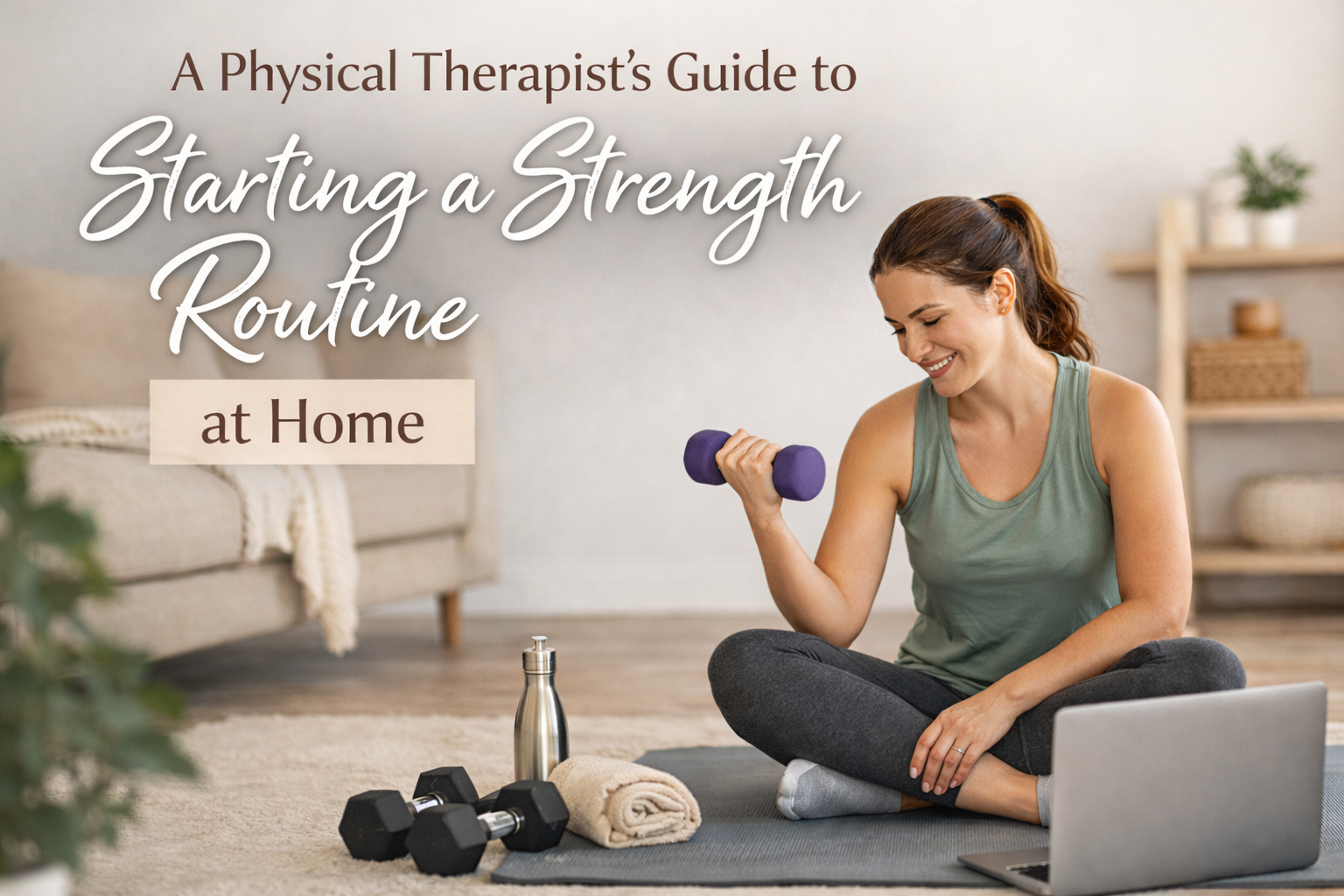
Starting a strength routine can feel overwhelming — especially if you’ve tried programs in the past that felt too intense, complicated, or difficult to stick with.
As a licensed physical therapist, I often work with women who want to feel stronger but don’t want workouts that leave them feeling exhausted, sore, or discouraged.
The good news is this: strength does not have to be extreme to be effective.
What matters most is intention. A steady, thoughtful approach to strength training can help you build confidence in your body, improve how you move, and support long-term wellness — all from the comfort of home.
Why This Approach to Strength Training Works

One of the most common patterns I see when people start a strength training routine is that they try to do too much, too soon. Motivation is high, which is great — but without a solid foundation, intensity can quickly outpace what the body is ready to support.
When foundational pieces like movement quality, breathing, core control, and gradual loading are skipped, the body often finds ways to compensate. These compensations may not be obvious at first, but over time they can show up as nagging aches, recurring discomfort, or injuries that interrupt progress altogether.
From a physical therapy perspective, building strength is about teaching the body how to work efficiently before asking it to work harder. Taking the time to establish a strong foundation allows muscles and joints to share the load appropriately, reducing unnecessary strain and supporting better long-term outcomes.
This kind of approach isn’t about holding yourself back — it’s about setting yourself up for consistency. When strength training feels supportive instead of punishing, it becomes something you can return to week after week, building results that last.
What Starting a Strength Routine at Home Really Looks Like

Starting a strength routine at home doesn’t require a long list of exercises or a perfectly structured program. In fact, keeping things simple at the beginning often leads to better results over time.
A strong place to start is by choosing just a few foundational movements that allow you to work through different parts of your body. Focusing on quality over quantity helps your body learn how to move well before adding more complexity or resistance.
Short, manageable sessions are often more effective than longer workouts that feel difficult to recover from. Even 10–20 minutes of intentional movement can be enough to build strength when done consistently. Giving yourself permission to start small makes it easier to return to your routine regularly.
Paying attention to breathing, control, and how your body feels during and after each session matters more than chasing fatigue. Strength training should leave you feeling supported and capable — not depleted.
Most importantly, your routine should be adaptable. Some days will feel stronger than others, and that’s normal. Building flexibility into your approach allows strength training to fit into real life rather than compete with it.
Common Mistakes to Avoid When Getting Started

When motivation is high, it’s easy to fall into patterns that feel productive at first but can make consistency harder over time. These are some of the most common challenges I see when people begin a strength training routine.
Doing too much, too soon.
Jumping into frequent, high-intensity workouts can quickly outpace what your body is ready to handle. Without allowing time for recovery, this often leads to excessive soreness, fatigue, or setbacks that interrupt progress.
Skipping the basics.
Focusing only on exercises without attention to form, breathing, and control can limit the benefits of strength training. These foundational elements support efficient movement and help reduce unnecessary strain on the body.
Chasing exhaustion instead of effectiveness.
Feeling completely worn out after a workout is not a requirement for progress. Strength training should challenge you, but it should also leave you feeling capable and supported — not depleted.
Ignoring how your body responds.
Discomfort, fatigue, or lingering soreness are signals worth paying attention to. Learning to adjust based on how your body feels helps build a routine that is sustainable and safe over time.
These mistakes are incredibly common — and they’re part of learning. Awareness is often the first step toward building a routine that truly supports you.
A Final Thought

Starting a strength routine doesn’t have to be about doing more — it’s often about doing things more intentionally. Progress isn’t measured by how hard you push, but by how consistently you show up in a way that supports your body.
I’ve been there myself, and I’ve seen it countless times in my work with patients and clients — when strength training becomes too intense or overwhelming, it’s often the very thing that makes people stop. When the approach feels supportive and sustainable, consistency becomes possible.
Strength training should feel like something you can return to, not something you need to recover from or start over with repeatedly. When you build strength with awareness and patience, it becomes part of your life rather than another source of pressure.
If you’re beginning — or beginning again — know that where you are right now is enough. Small, thoughtful steps add up over time.
With this blog, my goal is to make strength and wellness feel approachable, informed, and sustainable. I’m glad you’re here, and I hope you’ll continue exploring ways to build strength and confidence in your body — at your own pace.